LOVE STORY: JOHN F. KENNEDY JR & CAROLYN BESSETTE: Official Podcast Episode 3: ALEX DIGERLANDO
PODCAST
LOVE STORY: JOHN F. KENNEDY JR. & CAROLYN BESSETTE OFFICIAL PODCAST
EPISODE 3
LOVE STORY: JOHN F. KENNEDY JR. & CAROLYN BESSETTE
EPISODE 3: ALEX DIGERLANDO



EPISODE TRANSCRIPT
EPISODE 3: ALEX DIGERLANDO
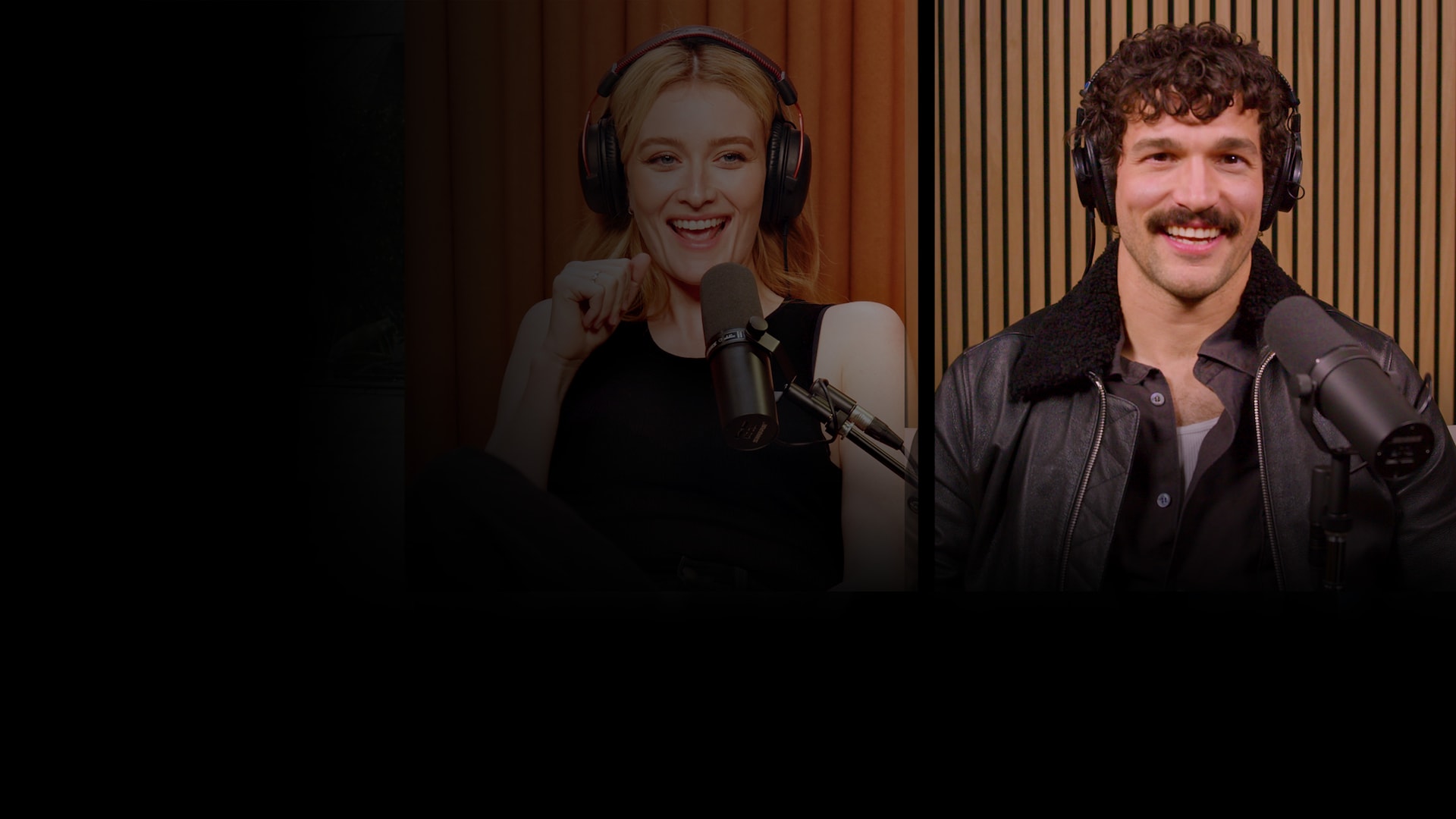
EVAN ROSS KATZ: Welcome back to the Love story, John F. Kennedy Jr. And Carolyn Bessette official podcast. I'm Evan Ross Katz podcaster and thanks to the show your new favorite lover boy. Here to talk about the show's timeless Aesthetic is Emmy Award-winning production designer Alex Gerland.
Alex, thank you so much for being here. I am particularly excited to chat with you because I feel like this show, the production design is Capital P, capital D production design. I mean, this is incredibly, uh, the amount of sets, the amount of on location aspects of this show. It is. Just enormous. So can you start by defining exactly what the role of a production designer is?
ALEX GERLAND: Well, the production designer's responsible for everything you see in front of the camera. So every space that someone is in, whether it's built for the show or found, and redressed, and then also how all those things work together and create the overall look and feel of the show. So like in the case of.
This show, we had a very kind of specific color palette we were working with. You know, Ryan had an aesthetic that he wanted to go for this very minimalist feel so that the, the actors really popped off the backgrounds and so. Choosing all the locations and building the sets, we really were trying to find, you know, the, the perfect balance for that.
EVAN ROSS KATZ: So can you talk about the vision that you had for the show initially, and then how that evolved over time through creative conversations with Ryan and with others involved?
ALEX GERLAND: So in the case of love story, we were making something that was like slightly heightened or stylized by. Like, as I mentioned, you know, Ryan was very interested in, in creating a very minimalist backdrop for all the action, um, which was part of the aesthetic of the mid nineties, driven by Calvin Klein and Calvin Klein being a character in the story and also.
Caroline, having worked there and being, you know, one of the touchstones of nineties chic, we sort of use that as our metronome throughout the entire series. So, like an interesting example is Jackie Kennedy's apartment, uh, at 10 45th Avenue. There are pictures, you know, there's a Sotheby's catalog that you can get that shows, uh, a number of pictures of the apartment and how it actually was.
And we wanted to represent the apartment as accurately as possible, but we also wanted it to fit into. The overall aesthetic of our show. So whereas she had a lot more, you know, clashing colors in, in her personal assign and aesthetic, we wanted something that was a little bit more muted. So we copied the architecture exactly, but then we sort of.
Played with the dials of how extreme and how busy the, the fabrics and wallpapers that we chose were.
EVAN ROSS KATZ: So talking about 10 45th Avenue, for instance, having reference images to work with, I'm wondering if that makes the job easier or more difficult. 'cause on the one hand, it's like you have something to look at that you can potentially try and recreate.
And yet, as you were just saying, you know, you kind of wanted to take inspiration from it and alter it in a sense. Was that the case?
ALEX GERLAND: Well, yeah, it's always kind of like, um. A delicate dance, right? Because ultimately you're making a show that has its own sort of dramatic arc or its own aesthetic and like you don't always want to be or need to be like a slave to the reality of it.
That's always like a little bit scary, right? Because like, is someone gonna be, well that's not exactly right. But then ultimately you just have to like not really care and know that you're making a piece of art and like it could be a documentary, but that's a different thing, you know?
EVAN ROSS KATZ: Totally. So talk to me about the research process, how that works on a project like this, and was this research project different than other projects that you've worked on in the past?
ALEX GERLAND: I got my start doing this kind of work as a researcher for another designer, so research is a very important process for me, and there's sort of like two buckets that I think of research. One is sort of like the research with a capital R, which is like finding the facts. What did things actually look like?
Then there's the other research, which is more like. Just finding images that you might not even fully understand. What draws you to them. They have something about them, whether it's tone or vibe or just a feeling. And then you kind of merge those things together when you're conceiving a look of a project.
I did another project for FX called Fosse Verdin. Nicole Fosse, Bob Fosse, Gwen Vernon's daughter was a producer on that, and we, we really wanted to represent that exactly the way it was so that like when she walked onto the set, it was like. Traveling through time, that wasn't the case in this, you know, for a love story.
You know, we were, we're making something a little bit more like akin to. A classic romance.
EVAN ROSS KATZ: Right. I wanna talk about the Calvin Klein office and showroom because this is such a central set within the show. I mean, obviously it's the character of Carolyn's workplace, but additionally we have the character of Carolyn and the character of Jack coming there and having sort of like their post meet cute in a sense.
When he comes to get his measurements,
SHOW: you need the tailor too.
He's on his one break. Typically, our clients make appointments.
I'm a 33 waist. I know that you're a 32.
EVAN ROSS KATZ: Can you talk about building out that set? Especially because as we're talking about, there is a reference point for that.
ALEX GERLAND: So that was sort of one of the most fun and exciting things to do for the show. I remember it was like the first thing I really dug deep into. There are obviously a million photos of Calvin Klein and Calvin K models, and we all have an image of what, you know, the Calvin Klein aesthetic is.
I, I really had to do some deep dive to find, you know, photos of the inner working of the offices and the studios. So in doing that, I kind of discovered two things that, like from the seventies through the eighties into the early 90. He had a designer named Joe Durso that designed his spaces for him, and Joe Durso was kind of the grandfather of the high tech minimalism aesthetic of the seventies and eighties.
And then sometime in the mid nineties, he hired a, uh, architectural designer named John Pawson to sort of take over look. And John Paulson's, the one who designed the, uh, Madison Avenue showroom. When looking at the references with Ryan, he, he was drawn to certain things about dso. We actually sourced the exact rolling table that Durso designed for Calvin Klein and had that in there.
It was fun. Kind of like cherry picking our, our favorite. Design motifs from, from both of these like legendary designers and sort of making our own version of the Calvin Klein offices out of those.
EVAN ROSS KATZ: Hmm. And one interesting detail about Calvin Klein, but I think applicable to this show is sort of that minimalist design sense can be deceptively hard, you know, looks very easy, but not so in practice.
Uh, what details did you feel were most important to make sure were captured?
ALEX GERLAND: The real interesting thing about minimalism is. You don't have anywhere to hide, right? So like
EVAN ROSS KATZ: right.
ALEX GERLAND: in a maximalist set or a set that's filled with lots of dressing, there's a lot of things that kind of can hide imperfections in the set and, and you know, like the showroom is a great example.
If you can picture that room, there's all of these. Lines, vertical and horizontal lines that intersect. There's no artwork on the wall. There's barely any furniture, but the, the built-in elements are the things that draw your eye and the way the light bounces off of those things. If there was a buckle in the wall, the light's gonna bounce off that buckle.
Sometimes we had to do things twice or three times to get it. Just so you know, like the top of a closet might line up with the top of a door or a, the bottom of a mirror might line up with a shelf. And all those things have to be really precise.
EVAN ROSS KATZ: I also love that that table in the center of the showroom, watching Sarah Pigeon, who plays the character of Carolyn, watching her sort of use that set piece in the center of the room.
Yeah. Drape her body over it. And there's so much action that takes place sort of not only at that table, but with her over it. And I just feel like she turns that set piece almost into a prop in a sense. And I just loved seeing that.
ALEX GERLAND: Yeah, that was really cool. I mean, also nerve wracking because we didn't know she was gonna do that.
And of course that thing is cantilevered, so I mean, we, it was over-engineered. [00:08:00] I mean, that was actually like a, a wood veneer over a steel frame bolted into the floor. But seeing her like, sit on that thing, I'm like, is it gonna. Hold the weight, but it, it did Okay. Yeah.
EVAN ROSS KATZ: Wow. So a few landmark nineties restaurants show up in this show, particularly, you know, the ion indoc sheen, and I'm glad to say as of this recording, these restaurants do still exist.
Uh, can you talk about the locations scouting process for places like this?
ALEX GERLAND: So we had, you know, location manager extraordinaire, Paul Eskenazi, uh, as our location manager, and he knows how to. Get into famously difficult locations and the, the whole producing team and Ryan and me, we were all kinda on the same page that like.
We wanted to represent the real places that we all remember as being like important to New York City at the time. And so if a place still exists, we targeted, we kind of made a list of all the places that were still around and we said, regardless of whether or not they allow filming, we wanna do [00:09:00] everything we can to, to get ourselves into those places.
We didn't want any generic restaurants in the show, and I think we pretty much succeeded like we had. Michael's, like you mentioned, Odeon Indochine, um, the pool room at the Four Seasons, so that, that was really fun kind of way to represent the city.
EVAN ROSS KATZ: I wanna talk about the apartments that we see. You designed these apartments for each of these characters, obviously we have the character of Carolyn's studio, we have the character of John's Loft.
These each are so distinctive and they tell you so much about who these characters are. I mean, I think about that opening shot, uh, in the first episode with the character of Carolyn and seeing her just getting ready for the day in that cramped bathroom. And immediately I'm like, yes, that's what a New York City bathroom feels like.
That's what it's like to get ready in the morning. Can you talk about your approach to, let's talk about the character of Carolyn and the character of John's Apartments in particular.
ALEX GERLAND: So like we talked about before, the first thing is like we did the research right? And we so. Everyone knows that the real John F.
Kennedy Jr. Lived at 20 North Moore, which is actually where we shot the exterior scenes. And then we built the interior of that space based on research that we found of, of what the layout of that apartment was. And then we kind of amped it up and made it a little bit more aspirational than it really was.
I mean, it was kind of a, it was kind of famously surprising to people that. At that time, someone of that background and wealth lived in, in lower Manhattan. I mean, now it's a very chic neighborhood, but back then it was a little bit borderline. And so he was making a real statement by choosing that as his address.
But it, but it was a big apartment. You could afford a giant space down there
EVAN ROSS KATZ: and those ceiling heights.
ALEX GERLAND: Yeah, well, we exaggerated the ceiling heights. We decided that it would be cool to have a, uh, a lofted bedroom, which also, that's just cinematic. It's dynamic. And to be able to like, look down the entire throw of that apartment and up for shots from the lofted space.
I mean, a lot of times when you're designing a space, you're designing for a shot, not [00:11:00] just, you know, you're, you're trying to design for the character, but you're also designing for the camera and figuring out how to make. The set worked for both of those things. But in terms of Carolyn's, we wanted to show sort of that like kind of fairytale trajectory of like an apartment that you could like practically reach your arms out and touch both walls, and then go to her Prince Charming's apartment, which is like the New York City equivalent of a palace.
EVAN ROSS KATZ: Yeah.
ALEX GERLAND: You know, that was fun to play with that juxtaposition.
EVAN ROSS KATZ: Yeah, I love details like that. I wanna talk a little bit about details, actually inspired by that. Um, I'm thinking about episode three for instance, when the character of Carolyn and the character of John, they finished their date in Central Park and there's that wide shot on the street and you can literally see.
The steam rising up from the pipes on the street and it's just details like that, that really capture me because they feel so New York. Mm-hmm. And I'm wondering if there were key details that you, that were really important to you when you were kind of conceiving the look and feel of the show that you were like, I really wanna make sure this finds its way in.
ALEX GERLAND: I went to NYU in the nineties. And spent a lot of time walking around the streets of New York, and so doing a show like this that takes place in in a time in the city that I was familiar with was exciting and nostalgic. And yeah, I really wanted to create that feeling of, of New York of that time. Which is extremely difficult in this day and age because, you know, there are bike lanes and uh, charging kiosks and bus stops look different and garbage cans look different.
And we had a lot of exterior street work on this show, and newsstands are a huge aspect of the show and newstands. Don't look like that anymore. And magazines barely exist. So like creating all of those magazines was a huge lift and required the hard work of many, many sub-departments within the art department.
Graphics, set deck props, construction paint, like getting the news stands right, was very gratifying for me. And also we, we would come up with these, what we called as the street kit. We had a truck that always had the period, correct garbage cans, the mailboxes. Street signs and anytime we would show up on a street, we had to broom all the stuff that was period incorrect out and replace it with the correct things.
Kind of tedious, but I think it pays off because when you see it, it's those little details that that transport you through time.
EVAN ROSS KATZ: It absolutely does. I mean, there's a scene coming up where just seeing those old Coke and Diet Coke cans, you know, in the episode, it immediately. Gives you a signifier of the fact that this is not present day.
And also as a viewer it reminds you of like how much about the world has changed, as you just said, like newsstands practically gone, magazines practically gone. Something as simple as a coat can looks different. And so when you see it imagined as clearly as it is in a show like this, it really tells you how much has changed.
ALEX GERLAND: Yeah. And the nineties at this point, you know, we're talking about over 30 years in the past, but it doesn't seem, it's like hard to believe it's that far in the past as opposed to doing like. The thirties or forties. Right,
EVAN ROSS KATZ: right.
ALEX GERLAND: So the first instinct a lot of times is like, oh, do, is it really that much work?
And then you realize, oh yeah, it is that much work. There is that much to change. Because there are major differences, we just sort of like forget about.
EVAN ROSS KATZ: Yeah. The velocity of how much has changed is so staggering.
ALEX GERLAND: Yes. That's a great way of putting it. Yeah.
EVAN ROSS KATZ: Well, Alex, thank you so much for your time and congratulations on the show.
ALEX GERLAND: Oh, thanks. My pleasure.
EVAN ROSS KATZ: That's all for this time. On the next podcast, I'll be talking to Emmy nominated costume designer Rudy Mance. But everyone's favorite era in fashion. You can check it out on Hulu. Hulu on Disney Plus for bundle subscribers or wherever you get your podcasts terms apply and watch new episodes of Love Story, John F.
Kennedy Jr. And Carolyn Bessette on FX Hulu. And if you're a bundle subscriber, Hulu on Disney Plus terms apply so many places to fall in love with this new show. Be sure to rate, review and follow the love story. John F. Kennedy Jr. And Carolyn Bassett official podcast. Wherever you watch or listen. I'm Evan Ross Katz, and I'll see you next time.